top of page

- I currently teach high school visual arts, guiding students through an inquiry-based, process-driven approach to creative development. My teaching emphasizes personal interests, meaningful questions, research, experimentation, revision, and reflection. I encourage students to move beyond technique, think critically, and develop original work that communicates their individual ideas and artistic voices. I am also an artist and visual storyteller specializing in storyboarding and 3D animation. With over forty years of experience developing original stories and creative properties, I use drawing, sequential art, animation, and digital production to explore character, narrative, and visual storytelling. Storyboarding is central to my creative practice because it brings together drawing, composition, cinematography, character performance, and story structure. My work in 3D animation extends these ideas through movement, acting, environment, and interactive storytelling. Across both my teaching and professional practice, I emphasize inquiry, process, research, experimentation, and originality. My goal is to create meaningful stories while helping young artists develop the skills, confidence, and independence to bring their own ideas to life.
My story, an excerpt from my graduate thesis
becoming an artist and educator began with a 20-year painting, advertising, and design career. I was always interested in everything creative. Since childhood, building, making, and organizing have always seemed natural. I wanted to be the best at whatever I was tasked to do. If I did something, I tried to understand it, streamline it, and modify it into something new, perfect, and memorable.
Like most people, I did not have a perfect childhood. I was disconnected from my 15-year-old birth mother when I was two years old. I was placed with guardians related to my birth mother. Although I would stay with that family growing up, adoption papers were never signed, and I retained a different name from my step-siblings. The separation from my mother caused a diagnosis of emotional retardation and hyperactivity. I have always moved fast. I did talk a lot growing up, but I was never aggressive. I was an early test subject for Ritalin to deal with my independent nature. I do not remember it having much effect, although guardians, doctors, and teachers would argue otherwise. Despite the drugs, I failed the second grade and had to revisit the same grade and watch my previous classmates continue without me. I cannot remember anyone teaching me anything, but I remember being judged. I never got along with my older brother. He was 40 pounds heavier than me, so I did my best to keep my distance. We never attended the same schools. My saving grace was the love my younger sister had for me. Sadly, I did not appreciate her then as much then as I do now.
My new family lived in a rural area, far from the classmates I would see at school. Our closest neighbors were three miles away. I did not see the friends I had made at school or over the summer. Every year was like starting over.
I have always taken art and craft classes, but not everyone understood my work. My earliest experience was drawing pictures of myself pulling a fire alarm. I did not know what it was, but teachers were amazed at the drawings I did recording the incident. From then on, I drew and scribbled all the time. On the bus, at home, or in the back of class. Some classmates would give me a nickel or a dime to draw their favorite cartoon characters. When I was not drawing, I was reading comic books. This is where I learned my morality and sense of justice: good always defeats evil, and if you work hard, someone will notice.
I started working at 15 years old. My first job was washing dishes at a nearby golf course. I worked every Sunday and cleaned up after parties during the week. This led to a position at a fast food restaurant, where I became assistant manager. After two years, my experience and reputation as a manager earned me an offer as a night cashier at a neighboring gas station, which would allow me to attend community college. The replacement manager from my previous job sought to make his reputation by accusing me of stealing carrot cakes after I had given two weeks' notice. I do not know where this accusation or acrimony came from. I had nothing to do with the theft, but the accusation rescinded my place at the gas station. Had I known better, I would have hired a lawyer and sued for defamation, but I was only 19 years old and did not know better. A disagreement about a late night with my foster father ended in an ultimatum. If I did not like his rules, I could leave. Being stubborn, I threw my comic books in my car and left. I have yet to return, though I do visit occasionally. I needed a new plan if I was ever going to go to college.
The Army offered me an alternative: a two-year enlistment and an educational college savings plan. The Army brought me to Washington DC, and my high test scores earned me a posting to the "The Old Guard," the official ceremonial escort to the President of the United States. After completing my tour, I left active duty. I finished my service commitment in the National Guard by completing Officers Candidate School (OCS) and earning a commission as a second lieutenant in the Military Police MP Corps. Concurrent with my Military academy completion, I entered the Corcoran School of Art in Washington, DC.
I remember what the Dean said on the first day of art school. "Ten years from now, 95% of you will never hold a pencil again." "Not me," I thought to myself. I was in this for the long haul. If I stayed true to my goals, I was sure to succeed. My pursuit of a degree in the arts would take precedence over everything else.
All art schools are full of outsiders. The roles students fall into are almost clichés. However, I was beyond that. A strait-laced soldier who had recently finished his tour as an infantry soldier that still drilled on weekends in the National Guard and went through the Officer Candidate school to be commissioned a second lieutenant. I wasn’t outside; I was on another planet.
I lasted a year longer than David Lynch, one of Corcoran's most famous students, with a year and a half longer than Jared Leto. I did very well in the first year but not so much in the second year. Abstract expressionism was the focus of the fine arts program. New York or Los Angeles should have been my destination because I was more interested in illustration, painting, and storytelling. I learned a lot about loosening up and handling paint and materials, but I had to work full-time at night to afford tuition, board, and supplies. Eighteen credits combined with 45 late evening hours a week carrying ice and cleaning toilets took their toll. Despite finishing my assignments, I could not get to class on time. I was not as lucky as Warhol. My inability to balance survival and academics led to my dismissal.
I had to transfer and start over at a local university with a minor in art education. My transfer credits allowed me to study advertising and theater and even walk on to the university football team. I completed my degree with a 3.65 GPA but was not ready for the workplace. I was still working at night, but it wasn’t enough to cover the rent. I became homeless and lived in an abandoned storage room attached to a friend's business. I painted and put up shows. People looked, but no one was interested in buying. I was involved in the Mayor's DC Bicentennial art exhibit, and Art-o-matic shows, among others. I had written and illustrated a children's book and exhibited it at Capitol Children's Museum. Even though test readings of my children's book delighted children, publishers were not interested.
The fine art direction I was taking in life was not working. I needed a change of strategy. I spent time working with community access television and eventually started teaching television production. I started learning graphic design using early Macintosh computers, which got me small gigs and my first real job doing production art at a small advertising agency. My skills and knowledge of computers landed me an opportunity at a dying flagship department store marketing agency. While the experience of working with a talented group of experienced artists grew my skills to a professional level, it did not last. The department store was sold, and the marketing department was dissolved.
With more and more people learning digital design, it was time to up my game and learn new skills. In 2001, I began studying three-dimensional (3D) modeling and animation. I learned Autodesk 3DS Max animation by traveling to New York on the weekends. I learned quickly and was offered a job training other artists in 3D. I had a choice: teach in New York or test my illustration skills in Los Angeles.
Los Angeles seemed the better choice for breaking into cartoons. I was hired to do print production for a periodical marketed in four states. I continued to study 3D, switching from 3DS Max to Alias Maya. I tried to sell my skills as a storyboard artist. These opportunities led to teaching animation at educational training centers and, finally, teaching an advanced computer graphics course for three years at the Los Angeles County High School for the Arts. I was recruited to travel to China to open animation schools. My partners could not reach agreements with Chinese educational institutions, and I had to return to America once my Visa was up. However, the experience left a lasting impression and a desire to return to China.
Back in LA, I signed up for TEFL training. Concurrently, I started working with Los Angeles producers, creating comics, storyboards, and animated music videos while drawing cartoon characters at the beach. I saved enough money to return to China two years later.
Returning to China was like starting my career over. I worked long hours teaching ESL in Beijing training centers. For five years, I worked 14-hour days, spending three to four hours each day traveling to and from work. This experience prepared me to enter the Chinese public education system first as an ELA (English language arts) and AP art history teacher and finally as a high school International Baccalaureate (IB) visual arts teacher, a position I hold today. During this time, I decided to pursue a Master of Art Education degree at AOEU to help inform my teaching pedagogy.

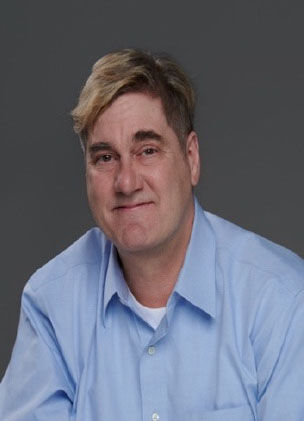
I'm Michael Walberg. BA, Fine art, MeD, Art Education. I combine inquiry, artistic process, storyboarding, and 3D animation to transform ideas into visual experiences that connect with audiences.
My Expertise
3d animation
Illustration
Typography
Concept & Design
Art Direction
Storyboarding
bottom of page